LOBO de CRIN o BOROCHI (Chrysocyon brachyurus)

Cánido de las pampas. Los guaraníes lo llaman aguará guasú ("zorro grande")
Más información en español, inglés y alemán o ver foto o video

A MIS LECTORAS... y al resto

“Amigos lectores que leerán este libro blog, | despójense de toda pasión | y no se escandalicen al leerlo |
no contiene mal ni corrupción; | es verdad que no encontrarán nada de perfección |
salvo en materia de reír; |
mi corazón no puede elegir otro sujeto | a la vista de la pena que los mina y los consume. |
Vale mejor tratar de reír que derramar lágrimas, | porque la risa es lo propio y noble del alma. Sean felices!
--François Rabelais (circa 1534) [english]
Mostrando las entradas con la etiqueta arte. Mostrar todas las entradas

lunes, 16 de julio de 2012

Las surrealistas

F
Remedios Varo, Exploration of the Source of the Orinoco River, 1959.
Women Surrealists are women artists, photographers, filmmakers and authors of the Surrealist Movement which began in the early 1920s. Many of them were part of, or connected to, the official Surrealist movement. Others were inspired but more distantly connected.
Painters
  • Eileen Forrester Agar (1899–1991) was born in Argentina and moved to Britain in childhood. She was prominent among British surrealists; Agar made intricate collages and paintings of abstract organic shapes.[1]
  • Leonora Carrington (1917–2011) was a British-born Surrealist painter. She met the Surrealist Max Ernst in 1937, and had a painful and complicated relationship with him. Much of her work is autobiographical.[2]
  • Kay Sage (1898–1963) began painting surrealist landscapes in the late 1930s, met and married fellow surrealist Yves Tanguy in 1940.[2]
  • Dorothea Tanning (1910–2012) was unable to join the Surrealists in Paris in 1940 because of the threat of war; she worked in New York, Arizona, and then Paris after the war. Her work has a rumpled, "juicy" look.[2]
  • Remedios Varo (1908–1963), a Spaniard who moved to Mexico, was known for her dreamlike paintings of scientific apparatus. She was married to the Surrealist poet Benjamin Peret.[2][3]
Sculptors
Photographers
  • Claude Cahun (1894–1954) was a French photographer and writer, associated with the surrealist movement.
  • Lee Miller (1907–1977) was an American photographer, photojournalist and model.
Fashion
Although not commonly classed with other fine arts, fashion also produced at least one Surrealist woman artist. Elsa Schiaparelli, (1890–1973) was an Italian fashion designer, a colleague of, friend of, and collaborator with Salvador Dalí and Leonor Fini, among others.[6]
See also

miércoles, 17 de agosto de 2011

Mucha estilo

Alfons M. Mucha

http://upload.wikimedia.org/wikipedia/commons/2/2b/Alfons_Mucha_-_1896_-_Winter.jpg
Invierno

http://upload.wikimedia.org/wikipedia/commons/6/6f/Alfons_Mucha_-_1896_-_Spring.jpg
Primavera

http://upload.wikimedia.org/wikipedia/commons/8/87/Alfons_Mucha_-_1896_-_Summer.jpg
Verano

http://upload.wikimedia.org/wikipedia/commons/e/ed/Alfons_Mucha_-_1896_-_Autumn.jpg
Otoño

lunes, 13 de junio de 2011

Alma Mahler y la primera muñeca para hombres

http://legadodeuntitan.com/blog/wp-content/uploads/2011/03/alma-mahler.jpg

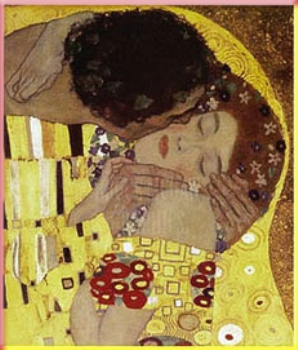
EL BESO (Klimt)
 Lovers and Husbands

Gustav Klimt


Alexander Zemlinsky
Gustav Mahler
Walter Gropius
Dr. Paul Kammerer
Oskar Kokoschka
Franz Werfel
Johannes Hollnsteiner
================


1879 - 1901
1901 - 1911
1911 - 1919
1919 - 1938
1938 - 1945
1945 - 1964
La mujer de todos

Source
The Puppet
Oskar Kokoschka about the Puppet (0,4 MB)
In July I9I8 Oskar Kokoschka ordered a life-size doll from the Munich doll-maker Hermine Moos as a substitute for his lost love. It was to be made to look exactly like Alma Mahler.
On July 22 he already returned a model of the head, having checked it and made suggestions as to how the work should proceed. "If you are able to carry out this task as I would wish, to deceive me with such magic that when I see it and touch it imagine that I have the woman of my dreams in front of me, then dear Fräulein Moos, I will be eternally indebted to your skills of invention and your womanly sensitivity as you may already have deduced from the discussion we had."
Kokoschka's letter to Hermine Moos Study for "Woman in blue" (1919)
left: Kokoschka's letter to Hermine Moos
right: Study for "Woman in blue" (1919)

The doll was not finished until the second half of February 1919. On February 22 Kokoschka asked to have the doll sent to him. The ensuing disappointment was huge. The doll could scarcely fulfil Kokoschka’s erotic and sexual desires and in the end became no more than a kind of still-life model. The artist then took the place of the unhappy lover and by means of a painterly (and graphic) metamorphosis of the doll he breathed new life into Alma as a "figure of art”.

"Devotion" (1918) Hermine Moos with the puppet
left: "Devotion" (1918)
right: Hermine Moos with the puppet

When Kokoschka was questioned on the matter of his fetish in I93I/32, he came straight to the point: "Finally, after I had drawn it and painted it over and over again, I decided to do away with it. It had managed to cure me completely of my Passion. So I gave a big champagne Party with chamber music, during which my maid Hulda exhibited the doll in all its beautiful clothes for the last time. When dawn broke - I was quite drunk, as was everyone else - I beheaded it out in the garden and broke a bottle-of red wine over its head.”
... read more about "The Puppet"

Die Alma Puppe
Above: The Puppet
Right: Oskar Kokoschka:
Girl with Doll (1921/22)
Reserl Kokoschka
Source
Bonnie Roos - Oskar Kokoschka's Sex Toy: The Women and the Doll Who Conceived the Artist - Modernism/modernity 12:2 Modernism/modernity 12.2 (2005) 291-309 Oskar Kokoschka's Sex Toy: The Women and the Doll Who Conceived the Artist Bonnie Roos How can those terrified vague fingers push The feathered glory from her loosening thighs? And how can body, laid in that white rush, But feel the strange heart beating where it lies? —William Butler Yeats, "Leda and the Swan" (1923) Upon returning home from World War I, Oskar Kokoschka found that his lover, Alma Mahler, had married another man. In response, he commissioned the creation of a life-size doll to match Mahler's exact proportions. Kokoschka provoked rumor and scandal as he escorted his doll to the opera, held parties in its honor, and hired a maid to dress and service it. This provocative public performance inspired rampant speculation about what else, exactly, Kokoschka did with the doll. The doll met its "unnatural" demise when one of Kokoschka's parties got out of hand. Police questioned Kokoschka in the morning about a murder; a beheaded and bloody body was reportedly seen outside his home. Evidently it was the naked, wine-splattered doll, which had somehow lost its head during the revelries of the previous evening. This was the story that Kokoschka and his critics, both then and now, loved to tell, embellishing racy details, speaking to fetishism, sex dolls, pranks, and occasional misogyny. ...

lunes, 7 de febrero de 2011

van Meegeren: el falsificador falsificado

The forger forged
Van Meegeren’s own work rose in price after he had become famous and it consequently became worthwhile to fake his paintings as well. Existing paintings obtained a signature “H. van Meegeren”, or new pictures were made in his style and falsely signed. When van Meegeren saw a fake like that, he ironically remarked that he would have adopted them if they had been good enough, but regrettably he had not yet seen one.
Later on, however, his son Jacques van Meegeren started to fake his father’s work. He made paintings in his father’s style – although of much lower quality – and was able to place a perfect signature on these imitations. Many fakes – both by Jacques and by others – are still on the market. They can be recognized by their low pictorial quality, but are not always regarded as such. As a result they have given a bad name to van Meegeren’s oeuvre. For more information, see the section titled "Fake van Meegerens" in the article about Jacques van Meegeren.

Before his trial Han van Meegeren demonstrated his forgery techniques before an expert panel by painting his last forgery Jesus among the Doctors
Born Henricus Antonius van Meegeren
10 October 1889(1889-10-10)
Deventer, Netherlands
Died 30 December 1947(1947-12-30) (aged 58)
Amsterdam, Netherlands
Cause of death Heart attack
Occupation Painter, art forger


lunes, 24 de enero de 2011

Consorzio Vera Pelle Italiana

Quelle
El arte provocador de Oliviero Toscani

lunes, 27 de diciembre de 2010

Ten things Milton Glaser has learned

Read it
About him
On Feb 25th, 2010, Milton Glaser received the The National Medal of Arts. The award was presented by President Obama in the East Room of The White House. Milton was the first designer to receive this honor. In addition to Milton, the recipients included Bob Dylan, Clint Eastwood, Maya Lin, Rita Moreno, Jessye Norman, Joseph P. Riley, Jr., Frank Stella, Michael Tilson Thomas, and John Williams.
• View the full ceremony here.
Milton and President Obama

viernes, 6 de noviembre de 2009

An art history timeline

smarthistory.org/timeline.html
Smarthistory's Timeline on Dipity

Barbarian Art

Source
In historical context it is very important to keep in mind that the word “barbarian” did not originally carry the same connotations as it does today. It comes from the Greek word “barbaros,” meaning simply “foreign.” So for our purposes “barbarian” will be used here as a blanket term for non-Roman, nomadic, and illiterate groups traveling throughout Europe during the middle ages. The cultural exchange that occurred in Europe after antiquity can be seen through artwork, among other things; Romans borrowed from “Barbarian” aesthetic, and vice versa.
The Roman historian Ammianus Marcellinus wrote about different Barbarian tribes he encountered during the 4th century in his Roman History. He admired their military prowess and fierceness: something all the barbarians had in common. While he complimented the Gauls on their cleanliness, and the Alans on their beauty, he held contempt for the nomadic and horse-loving Huns. The general trend is that when an outside group was more different (called “less civilized”), the members of that group were more likely to be hated and feared. The barbarians, being humans, had vices and virtues just like the Romans did. It is also important to keep in mind that the Roman empire contained many different ethnic groups, and people of “barbarian” descent sometimes considered themselves Roman.
Ammianus did not have kind words for the actual inhabitants of Rome after his visit in 400, stating, “Those few mansions which were once celebrated for the serious cultivation of liberal studies, now are filled with ridiculous amusements of torpid indolence, reechoing with the sound of singing, and the tinkle of flutes and lyres” (XIV.16: The Luxury of the Rich in Rome, c. 400 C). Much to Ammianus’s dismay, the grand reputation that Rome held during antiquity no longer had a foundation. His writings demonstrate that the early middle ages were a time of barbarian conquest and Roman decline. Luckily for us, the political unrest of the period makes studying medieval artwork and history so fascinating!

Fibulae

Source Text by Rebecca Mir (Share this article)
smarthistory.org
Fibulae (singular: fibula) are brooches that were made popular by Roman military campaigns. They all consist of a body, a pin, and a catch. Ornate fibulae became all the rage in the early middle ages, and are one of the most commonly found objects in barbarian grave sites. Grave goods like fibulae provide the most concrete cultural information about barbarians, due to the sparse amount of written documentation about them. The diverse ethnic groups were constantly borrowing from one another, while putting their own spin on things.

Byzantine Fibula, c.a. 430, Metropolitan Museum of Art

This was a very popular style of fibula, and is called a “crossbow” fibula because of its resemblance to the weapon. Unscrewing the left knob at the end of this “crossbow” would release the pin, which is visible in this photograph. The detailed incising on the body is called pierced openwork, and bears a Christian cross amongst a circular leaf motif. The Byzantines were a part of the eastern Roman empire, their capital being Constantinople. Their empire was a continuation of the Roman empire during the middle ages, while the majority of modern-day Italy was overtaken by barbarian tribes. Although precious and intricate, it is a relatively simple design, indicative of the Byzantine/Roman fibulae style.


Lombard FibulaLombardic Fibula, Mid 6th Century, National Museum of Slovenia

This Lombardic piece provides a good comparison, because it is a stylized variation of the crossbow fibula. It is gilded and inlaid with niello, a black metal alloy. The incisions are hatched lines, a popular decoration technique in Lombardic fibulae. The Lombards (or Langobards, from the Latin Langobardi) are thought to be of Germanic origin, although their background is still contested. They established their kingdom in Italy in 558 by conquering Byzantine land, and were defeated themselves by Charlemagne, king of the Franks, in 774. Over these centuries they assimilated into Roman culture, adopting Catholicism, and left their own administrative legal procedures behind. This piece shows the adoption of the crossbow fibula style, but with a small Lombardic “twist.”

Frankish FibulaeFrankish Fibulae, Middle of the 6th century, Musee des Antiquities Nationales, Saint-Germain-en-Laye


This pair of Frankish fibulae is a great example of cloisonné, a technique that was popular in barbarian art. This technique is characterized by inlaid semi-precious gems. The artisan would solder together partitions for the gems, then carefully place the gems inside them. In fact, the word cloisonné literally means “partitioned” in French. This example also shows a popular motif in barbaric art of the middle ages: eagles! The eagle, originally a pagan symbol of the sun, was used by Imperial Rome, and would later become an emblem to St. John. The end of these fibulae are in the shape of Eagle heads, and little fish are shown on the main body of the brooches. Garnets were used to decorate the eyes of the eagles, and a wide range of gems were used to decorate the rest of the fibulae. These stunning pieces demonstrate the proficiency of barbarian metal workers during the middle ages.

Visigothic FibulaeVisigothic Pair of Eagle Fibulae, 6th Century, Walters Art Museum

This pair of Visigothic fibulae is another great example of barbarian metalwork and cloisonné. These were decorated with garnets, amethyst, and colored glass. Pendants could have been hung from the small loops on the bottom on each fibulae. It is easy to see how these ornate fibulae are different from the Byzantine example discussed earlier. This pair was found at a Visigothic grave site in Spain, and were made over a century later than the Byzantine crossbow fibula. While both examples are fibulae and had the same functional purpose, the way in which they were decorated differed because of the culture producing them.

After all, when commissioning such expensive objects, the owners are going to want an object that resonates with their identity. For such a widespread object as the fibula, it is normal for similar groups to have similar artistic styles, and for more diverse groups to have less in common. These extraordinary examples of fibulae are proof of the diverse and distinct cultures living within larger empires and kingdoms, a social situation that was common during the middle ages.

lunes, 27 de julio de 2009

Kunst [Arte]

Kunst kommt von Können,
käme es von Wollen, würde es Wunst heißen.

Si vous l'aviez compris

http://www.youtube.com/watch?gl=PL&hl=pl&v=2ECLROT9aTA
Tino Rossi mit Orchester - Si vous l'aviez compris (Denza /Bordese), Columbia, early 1940s (German pressing)
---------------------------------
This Luigi Denza's art song - written for the male voice with piano, was performed by most of the great singers in history - from Caruso to Pavarotti.
Here we have a lovely chamber interpretation of Tino Rossi, accompanied by a small ensamble.
Gustave Caillebotte,
c. 1878. (Collection privée).
---------------------------------------
The slideshow, which illustrates this delicate and tender music are the paintings of the little known genius of Impressionism - Gustave Caillebotte.
GUSTAVE CAILLEBOTTE was born on August 19, 1848 to an upper-class Parisian family. His father, Martial Caillebotte (1799-1874), was the inheritor of the family's military textile business and was also a judge at the Seine department's Tribunal de Commerce. Caillebotte earned a law degree in 1868 and a license to practice law in 1870. After the French-Prussian war, when he served in the army, Caillebotte began visiting the studio of painter Léon Bonnat, where he began to seriously study painting. He developed an accomplished style in a relatively short period of time and had his first studio in his parents' home. In 1873, Caillebotte entered into the École des Beaux-Arts, but apparently did not spend much time there. He inherited his father's fortune and around 1874 he met and befriended several artists working outside the official French Academy, including Edgar Degas and Giuseppe de Nittis, and attended (but did not participate in) the first Impressionist exhibition of 1874.
Caillebotte's style belongs to the School of Realism but was strongly influenced by his Impressionist associates. As did his predecessors Jean-Francois Millet and Gustave Courbet, as well his contemporary Degas, Caillebotte aimed to paint reality as it existed and as he saw it, hoping to reduce painting's inherent theatricality. Perhaps because of his close relationship with so many of his peers, his style and technique varies considerably among his works, as if "borrowing" and experimenting, but not really sticking to any one style. At times, he seems very much in the Degas camp of rich-colored realism (especially his interior scenes) and at other times, he shares the Impressionists' commitment to "optical truth" and employs an impressionistic pastel-softness and loose brush strokes most similar to Renoir and Pissarro.
Caillebotte painted many domestic and familial scenes, interiors, and portraits. But he is most well known for his paintings of urban Paris, such as "The Pont de l'Europe" (Le pont de l'Europe) (1876), or "Place de l'Europe In The Rain" (1877). The latter is almost unique among his works for its particularly flat colors and photo-realistic effect which gives the painting its distinctive and modern look, almost akin to American Realists such as Edward Hopper.
Caillebotte's painting career slowed dramatically in the early 1890s, when he stopped making large canvases. He died of pulmonary congestion while working in his garden at Petit-Gennevilliers in 1894 at age 45, and was interred at Père Lachaise Cemetery in Paris.
See also:
http://pl.youtube.com/watch?v=2ZSADBh...
http://pl.youtube.com/watch?v=UWKUkuv...

viernes, 30 de enero de 2009

Relatividad del arte

LOS ÁNGELES, ene. 27 (UPI) -- La actriz Jennifer Aniston rechazó una millonaria oferta del dueño del imperio Playboy, Hugh Hefner, quien no logró convencerla para posar en al portada de su revista.
La oferta incluía 4 millones de dólares solo por posar, además de un bono por concepto de ventas, que podría haber elevado la cifra a más de 10 millones de dólares.
--------------------
Si fueran 10.000 US$ en Cambalandia o Collalandia no hubiera magnífica o semimagnífica o santa o zorra o virgencita que de un momento a otro no considere la desnudez total como el más elevado de las artes de mostrar el coño rasurado entre las piernas abiertas (en una revista considerada por muchas como pornográfica).
Eso se llama la relatividad en el arte. Tal como en los servicios sexuales.
Depende de a quién se desnuda ofreciendo y quién se desnuda recibiendo. El cuánto es por lo tanto muy relativo. Mil a uno o 10 Millones de dólares o 10.000 US$! Esa es la diferencia que algunas rechazan y otras jamás lo harían.
Por los 10 Millones de dólares se podría desnudar a todas las cambalandesas y collalandesas y otras aborigenlandesas.
Tocaría a cada una, fea, vieja, joven, casada, abuela, virgen o putilla mayor de 13, poco más de 2500.- US$.
Todas saldrían ganando si se aprobara mi proyecto. Por fin podrías hacer de tu hermana o tía o amiga una conejita de Playboy.
O mejor todavía: Porqué no hacer de esta Patria Socialista del s. XX! un enorme colectivo desnudo? Cada uno recibiría poco más de 1000 US$!
Evo Ayma, el presidente de los MASistas debe dar el ejemplo.

Lo que sea, Hugh Hefner se folla cada día nuevas conejitas poco mayores de 18 años. Si gusta o puede aún.
Envidio de muchos el poder económico, no el poder viril!

miércoles, 24 de septiembre de 2008

Stultissimus inmortalis est

Todas las clases de tontos. Stultorum infinitus est numerus.
Gracias, Inner. Perfecto!

Definición:

Tonto. adjetivo. Falto o escaso de entendimiento o razón.

Las clases:

1.- Tonto de pacotilla. Persona de tontería vulgar.

2.- Tontorrón. adjetivo. Aumentativo de tonto.

3.- Tontaina. Nombre común coloquial. Persona tonta.

4.- Tontico. Nombre común coloquial. Persona con algún retraso

5.- Tontucio. adjetivo. Medio tonto.

6.- Tontuzo. El que tiene la otra mitad de la tontería del tontucio.

7.- Tonto del bote. Persona a la que le ha sonreído la suerte sin haber hecho nada para merecerlo. Debemos esta expresión a un mendigo madrileño del primer tercio del siglo XIX que llevaba un bote de cuero para recoger las limosnas. Tuvo su “puesto de pedir” a las puertas del desaparecido convento de San Antonio del Prado. En cierta corrida de toros, uno de los astados saltó la barrera y enfiló la Carrera de San Jerónimo. Venía bufando, haciendo destrozos, y volteando a los paseantes. Al llegar frente al mendigo, que desconociendo el peligro permaneció inmóvil, el animal le acercó el testuz, le husmeó y, al cabo, volvió grupas, sin causarle el menor daño.

8.- Tonto de capirote. Aplicado a la persona muy necia o incapaz. Miguel de Unamuno, en un artículo publicado en 1923, decía que tonto de capirote “es el que con un capirote o bonete puntiagudo, hace de tonto en las fiestas. Es un tonto de alquiler y casi oficial”.

9.- Tonto de campeonato. El mas tonto entre los tontos.

10.- Tonto de las pelotas. Persona estúpida e irritante.

11.- Tontolapolla. Contracción lingüística de “tonto de la polla”. Persona idiota y odiosa.

12.- Tontolaba. Esta palabra tiene su origen en la costumbre de poner en los roscones de reyes un haba y un regalo. Al que le tocaba el regalo le coronaban como rey de la fiesta, y al que le tocaba el haba tenia que pagar el roscón; se le llamaba “el tonto del haba”.

13.- Tonto del culo. Que parece razonar con sus posaderas.

14.- Tonto del puto culo. Que parece razonar con sus putas posaderas.

15.- Tonto con suerte. El que es tonto y a pesar de ello todo le sale bien.

16.- Tonto feliz. Persona sin inquietudes intelectuales y feliz en su ignorancia.

17.- Tonto infeliz. Bobo, bobalicón.

18.- Tonto con balcones a la calle. Aquel cuya estulticia es tan manifiesta que esta se muestra al exterior.

19.- Tonto de cojones. Muy tonto.

20.- Tonto de remate. Extremadamente tonto.

21.- Tonto en babia. Distraído, despistado, alelado.

22.- Tonto falaz. El que finge ser corto de entendederas para esconder su malicia, urdir un engaño o evitar pagar por su maldad.

23.- Tonto enciclopedista. Que conoce un sinfín de tonterías (no confundir con el friki).

24.- Tonto locuaz. Que no se cansa de decir tonterías. Los hay con programa radiofónico propio y hasta protagonistas de espacios televisivos.

25.- Tonto estulto. Tonto por partida doble.

26.- Tonto a más no poder. El que ha alcanzado los limites de la tontería humana.

27.- Tonto sin remedio. Que nació tonto y se morirá tonto.

28.- Atontado. adjetivo. Dicho de una persona: tonta o que no sabe cómo conducirse.

29.- Tonto de solemnidad. Tonto notable o de mucha entidad.

30.- Tontin. Utilizado cariñosamente por las esposas para referirse al marido durante el primer año de matrimonio, y substituido posteriormente por adjetivos como: calzonazos, inútil, vago, manazas… alternados con la frase: “si ya me lo dijo mi madre”.

31.- Tonta. Mujer crédula y confiada que ha sido engañada en múltiples ocasiones con afirmaciones tales como: “no te va a doler” o “tu sigue que yo te aviso cuando llegue el momento”.

32.- Tonta de la pepitilla. Arturo Perez Reverte dixit.

Personajes arquetípicos:

La rubia tonta. Mujer con cabello de color parecido al del oro y aparentemente superficial que ha conseguido el éxito social gracias a su físico. De tonta no tiene un pelo.

El tonto del pueblo. Persona con retraso mental única en su pueblo. Caso de no existir, se le otorga este titulo al vecino mas idiota. En las ciudades se substituye por “el tonto del barrio”.

El tonto útil. Persona que sirve a una causa o movimiento al que no pertenece, ya sea inconscientemente o por simpatía. Expresión acuñada por Lenin para referirse a quien sin ser comunista apoyaba al comunismo, adoptando posiciones y tomando iniciativas que favorecían la causa.

El tonto bondadoso. Persona cándida en exceso, frecuentemente engañada por no adivinar o advertir la maldad ajena.

Grandes tontos contemporáneos: El tonto de las collejas.

Frases hechas:

Eres más tonto que Pichote, que se cayó de espaldas y se partió el cipote.

Llegas a ser mas tonto y naces sin cabeza.

Eres mas tonto que Abundio, que se fue a la vendimia y se llevó uvas de postre.

Eres más tonto que el que asó la manteca.

Aforismos, refranes y dichos populares:

Hay tres clases de tontos: hay tontos que tontos son, hay tontos que tontos se hacen y hay tontos que quieren hacer tontos a los que tontos no son.

Hay dos clases de tontos: el que presta libros y el que los devuelve.

Cada día que amanece el numero de tontos crece.

Pan con pan, comida de tontos.

Mal de muchos, consuelo de tontos.

Es de sabios preguntar y de tontos el callar.

A los tontos y a los porfiados, la mejor bofetada es dejarlos.

Tontos y locos, nunca fueron pocos.

Con el cedazo de los tontos ciernen los listos.

La risa abunda en la boca de los tontos.

No hay tonto que no se tenga por listo.

Cuando un tonto coge una vereda, ni la vereda deja al tonto ni el tonto deja la vereda.

La hipocresía la adquieren unos por tontos y otros por inteligentes.

Un tonto engaña a cientos si le dan lugar y tiempo.

Un tonto se ríe de otro tonto.

Los sabios dicen proverbios, los tontos los repiten.

A todos los tontos se les aparece la Virgen.

Sana alguna vez el loco, pero jamás el tonto.

Con tontos, ni a misa.

Jesucristo curó ciegos y leprosos, pero no tontos.

Quien le alaba al tonto su tontería lo hace más tonto todavía.

Quien tonto va a la guerra, tonto viene de ella.

Un loco hace ciento y un tonto un regimiento.

Tonto instruido, tonto perdido.

Quien no dice lo que quiere, de tonto se muere.

Son tontos todos los que lo parecen y la mitad de los que no lo parecen.

Hombre piloso: o tonto o venturoso.

Mas en Refranero Psiquiátrico, del doctor Juan Francisco Diez Manrique (Ediciones de Librería Estudio, de Santander).

Citas:

No deja de ser humillante para una persona de ingenio saber que no hay tonto que no le pueda enseñar algo. - Jean Baptiste Say

La sonrisa es el idioma general de los hombres inteligentes. Sólo son tristes los tontos y los delincuentes. - Victor Ruiz Iriarte

Los tontos no gustan de admirar las cosas sino cuando llevan una etiqueta. - Georges Benjamin Clemenceau

No hay tonto más molesto que el ingenioso. - François de La Rochefoucauld

En la vida hay que ser un poco tonto porque si no lo son sólo los demás y no te dejan nada. - Ramón Gómez de la Serna

Ningún tonto se queja de serlo, no les debe ir tan mal. - Noel Clarasó

Un tonto sabio es más tonto que un tonto ignorante. - Jean-Baptiste Poquelin Moliére

También hay tonterías elegantes, como hay tontos bien vestidos. - Nicolás-Sebastien Roch Chamfort

Un hombre sin defectos es un tonto o un hipócrita del que debemos desconfiar. - Joseph Joubert

Sólo los tontos han creado progresos en el mundo, porque los listos se han adaptado a lo que había sin necesidad de inventar. - George Bernard Shaw

A veces más vale callar y pasar por tonto que abrir la boca y demostrarlo. - Noel Clarasó

La ventaja de ser inteligente es que así resulta más fácil pasar por tonto. Lo contrario es mucho más difícil. - Kurt Tucholsky

Estar preocupado es ser inteligente, aunque de un modo pasivo. Sólo los tontos carecen de preocupaciones. - Johann Wolfgang von Goethe

Atacar a otra persona porque dice tonterías es como encontrarte a tu enemigo mortal ahogándose en arenas movedizas y saltar sobre él blandiendo un cuchillo. - Karl Popper

Lo sabe todo, absolutamente todo. Figúrense lo tonto que será. - Miguel de Unamuno

No hay mas ciego que el que no quiere ver, ni más tonto que el que no quiere aprender. - Inner, El Pendejo.

Mas: * Las leyes fundamentales de la estupidez humana

domingo, 21 de septiembre de 2008

Cynthia Plaster Caster

Cynthia Plaster CasterUna idea especial para las que quieran inmortalizar los miembros importantes del MASismo boliviano.
Si hay problemas con los candidatos miembros,, pese a altas dosis de citrato de sildenafil, recomiendo un método de alta eficacia: el del rigor mortis que permitirá un trabajo tranquilo de las groupies indigenistas

Cynthia Plaster Caster began making plaster casts of these body parts in 1968, originally as a goofy way of meeting rock stars whom she idolized. The project has dominated the last 35 years of her life, and ironically her fame is now greater than many of the stars whom she depicted.
Mas información sobre Cynthia-funde-miembros en plastercaster.com
Su más complicada obra y el dueño de la matriz (mejor referido: penetriz), el alegre portador del original (Wayne):

viernes, 19 de septiembre de 2008

Eyacular para el arte

spermcube.org
Santa Eyaculación!
Un proyecto de 100.000 €! y 200000 eyaculaciones para llenar un metro cúbico
Al final como performance alguna actriz porno se dará un baño de semen.
O quizá ofrezcan un trago especial a las apasionadas que lo paguen en la fiesta del cierre de la exposición del tanque lleno:
Sperma on the rocks!
Cuba libre cremoso
Amarula & Milk
Un hombre debería tener 10 eyaculaciones diarias por 60 años para llenar su propio cubo....
Uff, eso ya es trabajo de artista porno, pero creo que ninguno empieza a los 14 y se jubila a los 75 en ese negocio placentero.


sábado, 26 de julio de 2008

Pa' erotomanos

Madera en su mejor expresion artistica, por Mario Philippona INFO
La mesa de arce y nogal cuesta en Holanda 19.995 €,
la silla 7.995 €, el armario 4.995 €
wpc4eb8cb9_0f.jpgwp0a3241be_0f.jpg