LOBO de CRIN o BOROCHI (Chrysocyon brachyurus)

Cánido de las pampas. Los guaraníes lo llaman aguará guasú ("zorro grande")
Más información en español, inglés y alemán o ver foto o video

A MIS LECTORAS... y al resto

“Amigos lectores que leerán este libro blog, | despójense de toda pasión | y no se escandalicen al leerlo |
no contiene mal ni corrupción; | es verdad que no encontrarán nada de perfección |
salvo en materia de reír; |
mi corazón no puede elegir otro sujeto | a la vista de la pena que los mina y los consume. |
Vale mejor tratar de reír que derramar lágrimas, | porque la risa es lo propio y noble del alma. Sean felices!
--François Rabelais (circa 1534) [english]
Mostrando las entradas con la etiqueta poemas. Mostrar todas las entradas

lunes, 28 de noviembre de 2011

... como sauce llorón...

Nezahualcoyotl: The fleeting pomp of this world is like a green willow

Weeping_willow_by_trabita_flickr_4
“The goods of this life, its glories and riches, are but lent to us, its substance is an illusory shadow, and the things of today shall change on the coming of the morrow. Then gather the fairest flowers from thy gardens to bind round thy brow, and seize the joys of the present ere they perish.” In another song handed down by memory through the generations, Nezahualcoyotl said of the present, “The fleeting pomp of the world is like a green willow,….but at the end a sharp axe destroys it, a north wind fells it.”
  --Flute of the Smoking Mirror, a Portrait of Nezahualcoyotl, by Frances Gillmor (1903-1993) Albuquerque, UNM Press 1949)
[Nezahualcoyotl , "Hungry Coyote," (1402-1472) was king of Texcoco, in what is now Mexico, and a famous poet]

jueves, 4 de agosto de 2011

Si...

Dedicado a un amigo que necesita o requiere (aún) de mis servicios de chamboncillo ;-)
Obrigado, estimao Ron
. Y usa este servicio
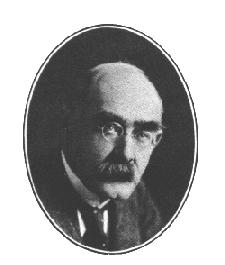
COMPLETE COLLECTION OF POEMSRudyard Kipling Portrait
Rudyard Kipling
Escrita en honor a un golpista imperial:
==============
"Si...", al español por Jacinto Miquelarena 
(recomendado, ya que la traducción líneas abajo no es buena)
«Si...» (originalmente "If—") es un poema escrito en 1896 por el autor inglés Rudyard Kipling, que en aquel momento contaba con 31 años. Fue publicado por primera vez en el «Brother Square Toes», capítulo de Rewards and Fairies, colección de poemas y relatos de Kipling de 1910. Como también ocurriera con Invictus, obra de William Ernest Henley, se trata de una memorable evocación del estoicismo de la era victoriana. Su reconocimiento internacional queda patente por el gran número de versiones y parodias que ha inspirado, así como por la amplia popularidad que todavía hoy tiene especialmente entre los británicos (tal es así que fue votado el poema favorito de los británicos en una encuesta organizada por la BBC en 1995).  
Según el propio Kipling en su autobiografía Something of Myself, publicado póstumamente en 1937, el poema fue inspirado por el Dr. Leander Starr Jameson, quien en 1895 lideró una incursión de las fuerzas británicas contra los Boers en Sudáfrica, que por ello fue llamada la «Incursión de Jameson».1 Este evento incrementó las tensiones que finalmente desembocaron en la Segunda Guerra Anglo-Bóer. La prensa británica, sin embargo, retrató a Jameson como un héroe en medio del desastre.
Nota Maligna:
Similitudes con lo que hizo el castrismo y su idolatria por un modelo innecesario en la cuba de los castro, el revolucionario asesino guevara de la sarna...
son locuras mías...
perdonadme!

la vida ensalzada de los hombres con tacha
la vida como suele ser!

If—
If you can keep your head when all around you
Are losing theirs and blaming it on you;
If you can trust yourself when all men doubt you,

But make allowance for their doubting too;
If you can wait and not be tired by waiting,
Or, being lied about, don't deal in lies,
Or, being hated, don't give way to hating,
And yet don't look too good, nor talk too wise;

If you can dream—and not make dreams your master;
If you can think—and not make thoughts your aim;
If you can meet with triumph and disaster
And treat those two imposters just the same;
If you can bear to hear the truth you've spoken
Twisted by knaves to make a trap for fools,
Or watch the things you gave your life to broken,
And stoop and build 'em up with wornout tools;

If you can make one heap of all your winnings
And risk it on one turn of pitch-and-toss,
And lose, and start again at your beginnings
And never breathe a word about your loss;
If you can force your heart and nerve and sinew
To serve your turn long after they are gone,
And so hold on when there is nothing in you
Except the Will which says to them: "Hold on";

If you can talk with crowds and keep your virtue,
Or walk with kings—nor lose the common touch;
If neither foes nor loving friends can hurt you;
If all men count with you, but none too much;
If you can fill the unforgiving minute
With sixty seconds' worth of distance run

Yours is the Earth and everything that's in it,
And—which is more—you'll be a Man my son!
-----------------------------------------------
Si...
Si puedes mantener en su lugar tu cabeza cuando todos a tu alrededor,
han perdido la suya y te culpan de ello.
Si crees en ti mismo cuando todo el mundo duda de ti,
pero también dejas lugar a sus dudas.

Si puedes esperar y no cansarte de la espera;
o si, siendo engañado, no respondes con engaños,
o si, siendo odiado, no te domina el odio
Y aún así no pareces demasiado bueno o demasiado sabio.

Si puedes soñar y no hacer de los sueños tu amo;
Si puedes pensar y no hacer de tus pensamientos tu único objetivo;
Si puedes conocer al triunfo y la derrota,
y tratar de la misma manera a esos dos impostores.
Si puedes soportar oír toda la verdad que has dicho,
tergiversada por malhechores para engañar a los necios.
O ver cómo se rompe todo lo que has creado en tu vida,
y agacharte para reconstruírlo con herramientas maltrechas.

Si puedes amontonar todo lo que has ganado
y arriesgarlo todo a un sólo lanzamiento ;
y perderlo, y empezar de nuevo desde el principio
y no decir ni una palabra sobre tu pérdida.
Si puedes forzar tu corazón y tus nervios y tus tendones,
para seguir adelante mucho después de haberlos perdido,
y resistir cuando no haya nada en ti
salvo la voluntad que te dice: "Resiste!".

Si puedes hablar a las masas y conservar tu virtud.
o caminar junto a reyes, y no distanciarte de los demás.
Si ni amigos ni enemigos pueden herirte.
Si todos cuentan contigo, pero ninguno demasiado.
Si puedes llenar el inexorable minuto,
con sesenta segundos que valieron la pena recorrer...

Todo lo que hay sobre La Tierra será tuyo,
y lo que es más: serás un hombre, hijo mío.

==========
Y tuyo será el reino de los cielos
y lo que es más: serás inmortal, hijo mío
y tu alma será salva... etcetera
[mi versión para los fieles cristianos]
--un mortal paga-no: ceb

The Man From Snowy River


"The Man from Snowy River" is a poem by Australian bush poet Banjo Paterson. It was first published in The Bulletin, an Australian news magazine, on 26th April 1890.
The poem tells the story of a horseback pursuit to recapture the colt of a prizewinning racehorse that escaped from its paddock and is living wild with the brumbies (wild horses) of the mountain ranges. Eventually the brumbies descend a seemingly impassably steep slope, at which point the assembled riders give up the pursuit, except the young hero, who spurs his pony down the "terrible descent" to catch the mob.
Two characters mentioned in the early part of the poem are featured in previous Paterson poems; "Clancy of the Overflow" and Harrison from "Old Pardon, Son of Reprieve".

The historical context of the poem
The poem was written at a time in the 1880s and 1890s when Australia was developing a distinct identity as a nation. Though Australia was still a set of independent colonies under the final authority of Britain, and had not yet trod the path of nationhood, there was a distinct feeling that Australians needed to be united and become as one. Poems like "The Man from Snowy River" suggested to the many Australians at the time who read The Bulletin magazine of Sydney, that they shared a unique land and that the characters and heroes who inhabited this land had so much in common. Australians from all walks of life, be they from the country or the city ( see Clancy of the Overflow), looked to the bush for their mythology and heroic characters. They saw in the Man from Snowy River a hero whose bravery, adaptability and risk-taking could epitomise a new nation in the south. This new nation emerged as the Commonwealth of Australia in 1901.
Source
Mountain River and Pack Horses, original painting

Mountain River & Pack Horses - Original painting by Australian artist
Robert Lovett


There was movement at the station, for the word had passed around
That the colt from old Regret had got away,
And had joined the wild bush horses - he was worth a thousand pound,
So all the cracks had gathered to the fray.
All the tried and noted riders from the stations near and far
Had mustered at the homestead overnight,
For the bushmen love hard riding where the wild bush horses are,
And the stock-horse snuffs the battle with delight.

There was Harrison, who made his pile when Pardon won the cup,
The old man with his hair as white as snow;
But few could ride beside him when his blood was fairly up -
He would go wherever horse and man could go.
And Clancy of the Overflow came down to lend a hand,
No better horseman ever held the reins;
For never horse could throw him while the saddle-girths would stand -
He learnt to ride while droving on the plains.

And one was there, a stripling on a small and weedy beast;
He was something like a racehorse undersized,
With a touch of Timor pony - three parts thoroughbred at least -
And such as are by mountain horsemen prized.
He was hard and tough and wiry - just the sort that won't say die -
There was courage in his quick impatient tread;
And he bore the badge of gameness in his quick and fiery eye,
And the proud and lofty carriage of his head.

But still so slight and weedy, one would doubt his power to stay,
And the old man said, "That horse will never do
For a long and tiring gallop - lad, you'd better stop away,
These hills are far too rough for such as you."
So he waited, sad and wistful - only Clancy stood his friend -
"I think we ought to let him come," he said;
"I warrant he'll be with us when he's wanted at the end,
For both his horse and he are mountain bred.

"He hails from Snowy River, up by Kosciusko's side,
Where the hills are twice as steep and twice as rough;
Where a horse's hooves strike firelight from the flintstones every stride,
The man that holds his own is good enough.
And the Snowy river riders on the mountains make their home,
Where the river runs those giant hills between;
I have seen full many horsemen since I first commenced to roam,
But nowhere yet such horsemen have I seen."

So he went: they found the horses by the big mimosa clump,
They raced away towards the mountain's brow,
And the old man gave his orders, "Boys, go at them from the jump,
No use to try for fancy riding now.
And, Clancy, you must wheel them, try and wheel them to the right.
Ride boldly lad, and never fear the spills,
For never yet was rider that could keep the mob in sight,
If once they gain the shelter of those hills."

So Clancy rode to wheel them - he was racing on the wing
Where the best and boldest riders take their place,
And he raced his stock-horse past them and he made the ranges ring
With the stockwhip, as he met them face to face.
Then they halted for a moment, while he swung the dreaded lash,
But they saw their well-loved mountain full in view,
And they charged beneath the stockwhip with a sharp and sudden dash,
And off into the mountain scrub they flew.

Then fast the horsemen followed, where the gorges deep and black,
Resounded to the thunder of their tread,
And the stockwhips woke the echoes, and they fiercely answered back
From cliffs and crags that beetled overhead.
And upward, ever upward, the wild horses held their way,
Where mountain ash and kurrajong grew wide;
And the old man muttered fiercely, "We may bid the mob good day,
NO man can hold them down the other side."

When they reached the mountain's summit, even Clancy took a pull -
It well might make the boldest hold their breath;
The wild hop scrub grew thickly, and the hidden ground was full
Of wombat holes, and any slip was death.
But the man from Snowy River let the pony have his head,
And he swung his stockwhip round and gave a cheer,
And he raced him down the mountain like a torrent down its bed,
While the others stood and watched in very fear.

He sent the flint-stones flying, but the pony kept his feet,
He cleared the fallen timber in his stride,
And the man from Snowy River never shifted in his seat -
It was grand to see that mountain horseman ride.
Through the stringybarks and saplings, on the rough and broken ground,
Down the hillside at a racing pace he went;
And he never drew the bridle till he landed safe and sound
At the bottom of that terrible descent.

He was right among the horses as they climbed the farther hill,
And the watchers on the mountain, standing mute,
Saw him ply the stockwhip fiercely; he was right among them still,
As he raced across the clearing in pursuit.
Then they lost him for a moment, where two mountain gullies met
In the ranges - but a final glimpse reveals
On a dim and distant hillside the wild horses racing yet,
With the man from Snowy River at their heels.

And he ran them single-handed till their sides were white with foam;
He followed like a bloodhound on their track,
Till they halted, cowed and beaten; then he turned their heads for home,
And alone and unassisted brought them back.
But his hardy mountain pony he could scarcely raise a trot,
He was blood from hip to shoulder from the spur;
But his pluck was still undaunted, and his courage fiery hot,
For never yet was mountain horse a cur.

And down by Kosciusko, where the pine-clad ridges raise
Their torn and rugged battlements on high,
Where the air is clear as crystal, and the white stars fairly blaze
At midnight in the cold and frosty sky,
And where around the Overflow the reed-beds sweep and sway
To the breezes, and the rolling plains are wide,
The Man from Snowy River is a household word today,
And the stockmen tell the story of his ride.

- A.B. "Banjo" Paterson

martes, 21 de diciembre de 2010

El zorro y las zorras virtuales

Aah.... la vida en los parrales, con las uvas verdes..
Me refiero al zorro, no a la zorra de la fábula
Parafraseando a Félix María Samaniego
=======================
Es voz común que a más del mediodía,
en ayunas el zorro iba cazando;
halla una parra/[zorra]; quédase mirando
de la alta vid/[ventana] el fruto/[la foto] que pendía.
 
Causábale mil ansias y congojas
no alcanzar/[follar] a las uvas/[zorras] con la garra/[el miembro],
al mostrar a sus dientes/[ojos] la alta parra/[vasta red]
negros racimos/[pestañas] entre verdes hojas/[ojos].

Miró, saltó y anduvo en probaturas;
pero vio el imposible ya de fijo.
Entonces fue cuando el zorro dijo:
--No las quiero comer/[follar]. No están maduras.
[Están zorras]