LOBO de CRIN o BOROCHI (Chrysocyon brachyurus)

Cánido de las pampas. Los guaraníes lo llaman aguará guasú ("zorro grande")
Más información en español, inglés y alemán o ver foto o video

A MIS LECTORAS... y al resto

“Amigos lectores que leerán este libro blog, | despójense de toda pasión | y no se escandalicen al leerlo |
no contiene mal ni corrupción; | es verdad que no encontrarán nada de perfección |
salvo en materia de reír; |
mi corazón no puede elegir otro sujeto | a la vista de la pena que los mina y los consume. |
Vale mejor tratar de reír que derramar lágrimas, | porque la risa es lo propio y noble del alma. Sean felices!”
--François Rabelais (circa 1534) [english]

domingo, 7 de agosto de 2011

Ivan: El colmo de la guerra fría

youtube.com/watch?gl=AU&hl=en-GB&v=LOwEcLiK4cA
At the beginning of this excerpt, the explosion that you see is the 'Tsar Bomba' or 'Emperor Bomb' in English and it was detonated by the soviets on October 31st, 1961, on an island in the arctic sea to the north of Russia.
The weapon packed a yield of 57 Megatons on detonation, meaning that it was equal to the explosive force of 57,000,000 Tons of TNT, or 3800 times larger than the Hiroshima explosion. This monster bomb is famous for being the largest nuclear detonation on the face of this planet.
112 days earler the project to build the weapon, codenamed Ivan, was initiated by the soviet premier of the time Nikita Sergeyevich Khrushchev.
3 years before the Tsar Bomba was detonated, Khrushchev was enstated as the Premier of the Soviet Union in March 1958, and shortly after his enstatment the Soviet Union issued a statement in which it planned to suspend nuclear weapons testing. Dwight D. Eisenhower was the United States President until at the time, and he issued this statement shortly after the Soviet Union's announcement: "The United States is prepared, unless testing is resumed by the Soviet Union, to withhold further testing on its part of atomic and hydrogen weapons for a period of one year from the beginning of the negotiations."
There was a nuclear weapons moratorium in effect from late 1958, the last nuclear weapon detonated by the United States being 'Titania', a small sub-kiloton device detonated on October the 30th 1958 in Nevada, the last device detonated in the Hardtack II series of tests. Almost exactly 3 years later, the Soviet Union detonated the Tsar Bomba, effectively destroying the moratorium. The United States were furious. The Ambassador to the United Nations at the time was Adlai Stevenson, as pictured in the film giving this statement:
"Mr. Khrushchev has exploded his 'Giant Bomb' in cynical disregard of the United Nations. By this act, the Soviet Union have added injury to insult: They broke the moratorium on nuclear weapons testing. They have raised atmospheric pollution to new heights. They have started a new race for more deadly weapons. They have spurned the humanitarian appeal of the United Nations, and of all peace loving peoples. They have advanced no solid justification for exploding this monstrous and unnecessary weapon. They have been wholly unmoved by the dangers of radioactive fallout to the human race. The United States delegation deeply deplores this contempt for world opinion and we think that in the light of this sombre development, other delegations may wish to express their views on this shocking and distressing news. For today, Mr. Chairman, the world has taken a great leap backwards, toward anarchy and disaster."
The Narrator, William Shatner, then says: The Russians had Shattered the voluntary moratorium. The United States would follow suit with an extensive series of weapon tests, for massive retaliation.
The United States testing that was to follow the ending of the moratorium was codenamed Operation Nougat, a series of 69 nuclear weapon tests which began a month before the Tsar Bomba explosion. This was at the height of the aptly named 'Cold War' and the Cuban Missile Crisis, and it stood not only as testing, but as a deterrent against Soviet aggression. Any nuclear attack by either country would have escalated and triggered a full-scale thermonuclear war in which many millions would have perished, and making much of the world inhospitable. These weapons designed and constructed by the United States and Russia were designed to protect the countries but instead, if the Cold War became a reality, they would have had the destructive power to destroy much of the human race.
Remember to watch the documentary!! And if you wish to watch the entire 'Tsar Bomba' test, the link is:
youtube.com/watch?v=LxD44HO8dNQ
The footage used in this video was obtained from the documentary: "Trinity and Beyond" (1995), written and directed by Peter Kuran (Production Company: Visual Concept Entertainment) I do not hold any ownership or copyright to footage or audio, nor am I making or seeking to make profit from it. This video is simply intended to be informative
Ver

viernes, 5 de agosto de 2011

Le chaland qui passe

[El comprador que pasa]
Source
dutempsdescerisesauxfeuillesmortes.net/50_chansons/

Deux des chansons les plus "françaises" du répertoire dit "français" sont, on le sait, d'origine étrangère : "Viens Poupoule" qui est d'origine allemande - voir au numéro 12 - et "La Matchiche", d'origine espagnole - voir au numéro 16. - Qu'en était-il des Italiens ? - Et bien voilà : ce "Chaland qui passe", si français, si typiquement français que l'on a, pendant plus de quarante ans, distribué un des classiques du cinéma - français toujours - sous ce nom (avant de lui redonner son titre original : L'Atalante - Jean Vigo - 1934) aura été un succès italien avant de devenir ce grand classique que l'on sait.
Son créateur, ce qui en surprendra plusieurs, fut Vittorio de Sica (oui, oui : celui du Voleur de bicyclette) qui, en 1932 dans un film aujourd'hui plus ou moins connu, Gli Uomini, che Mascalzoni ! [*], avec son plus beau sourire, dans une quelconque guinguette, prit dans ses bras Lia Franca pour en faire un petit fox-trot inoubliable. - Paroles : Ennio Neri. - Musique : Cesare-Andrea Bixio.
Attiré par la musique de Bixio, Vigo décida d'en faire le thème de son film. Il chargea le parolier André de Badet, connu plus tard pour avoir adapté "Stormy Weather", d'en écrire les paroles sauf que la chanson "Le chaland qui passe" existait déjà sur une musique de Maurice Jaubert, le compositeur de la musique de L'Atalante... On parle donc de paroles françaises existantes, ajoutées à une musique d'origine italienne quelque peu transformée par un compositeur français. - L'honneur est sauf !
Quelle que soit sa petite histoire, que l'on parle de "Parlami d'amore, Mariu" ou du "Chaland qui passe", c'est dans les deux langues que la mélodie s'est répandue dans le monde entier. - Il en existe des centaines de versions, en anglais, en polonais, en grec, en suédois (Zarah Leander) et même en russe. - Mantovani l'a enregistrée, Mario Lanza, Giuseppe di Stefano, Luciano Pavarotti, Dmitri Hvorostovsky, les Trois Ténors... Dolce & Gabbana s'en est servi comme thème...
Pour la France, ne mentionnons que sa créatrice, Lys Gauty qui en fit un succès monstre, un succès presque aussi important que - passez-nous l'affront - celui du "Temps des cerises".
Entre 1933 et 1971, plus de quarante interprètes l'ont mis à leur répertoire et pas les moindres.
Tino Rossi fut un des premiers à la reprendre (en 1934).
Mais passons aux auditions où l'on sera étonné des transformations auxquelles cette chanson a été soumises.
Et voici la version originelle "Le chaland qui passe":
La nuit s'est faite, la berge
S'estompe et s'endort
Seule, au passage une auberge
Cligne ses yeux d'or
Le chaland glisse et j'emporte
D'un geste vainqueur
Ton jeune corps qui m'apporte
L'inconnu moqueur de son cœur

Ne pensons à rien, le courant
Fait de nous toujours des errants
Sur mon chaland, sautant d'un quai
L'amour peut-être s'est embarqué
Aimons-nous ce soir sans songer
À ce que demain peu changer
Au fil de l'eau point de serments
Ce n'est que sur terre qu'on ment

Version Gauty
La nuit s'est faite, la berge
S'estompe et se perd
Seule, au passage une auberge
Cligne ses yeux pers.
Le chaland glisse, sans trêve
Sur l'eau de satin
Où s'en va-t-il ? Vers quel rêve ?
Vers quel incertain
Du destin ?

Refrain
Ne pensons à rien, le courant
Fait de nous toujours des errants
Sur mon chaland, sautant d'un quai
L'amour peut-être s'est embarqué
Aimons-nous ce soir sans songer
A ce que demain peut changer
Au fil de l'eau point de serments :
Ce n'est que sur Terre qu'on ment !
Ta bouche est triste et j'évoque
Ces fruits mal mûris
Loin d'un soleil qui provoque
Leurs chauds coloris
Mais sous ma lèvre enfiévrée
Par l'onde et le vent
Je veux la voir empourprée
Comme au soleil levant
Les auvents

au Refrain
En version originale, d'abord, et en fox-trot, voici Vittorio de Sica : 
Voir
de plus!

Gli uomini, che mascalzoni....

[Los hombres, qué calzonazos...] "pícaros, bribones"
Canzone napolitana...ahh.... Vedi Napoli e poi Mori ;-) Ver Nápoles y después Mori (r)

Parlami d'amore Mariù è una canzone italiana del 1932 scritta da Cesare Andrea Bixio e Ennio Neri per la voce di Vittorio De Sica, che l'avrebbe interpretata nel film Gli uomini, che mascalzoni.
La versione in lingua francese, del 1933, con un testo completamente diverso scritto da André de Badet s'intitola "Le chaland qui passe" ed è stata interpretata da Lys Gauty e da Tino Rossi. Il tema della canzone fu utilizzato nel 1934 nella colonna sonora del film L'Atalante di Jean Vigo
Escena del filme (1932): Parlami d'Amore Mariu
Come sei bella più bella stasera mariú!
Splende un sorriso di stella negli occhituoi blu!
Anche se avverso il destino domani sarà
Oggi ti sono vicino, perche sospirar?
Non pensar!

Parlami d'amore, mariù!
Tutta la mia vita sei tu!
Gli occhi tuoi belle brillano
Fiamme di sogno scintillano

Dimmi che illusione non e
Dimmi che sei tutta per me!
Qui sul tuo cuor non soffro più
Parlami d'amore, mariù!

Parlami d'amore
Parlami d'amore
Parlami d'amore, mariù!
http://www.youtube.com/watch?v=JSNwnWAkmMw

jueves, 4 de agosto de 2011

Si...

Dedicado a un amigo que necesita o requiere (aún) de mis servicios de chamboncillo ;-)
Obrigado, estimao Ron
. Y usa este servicio
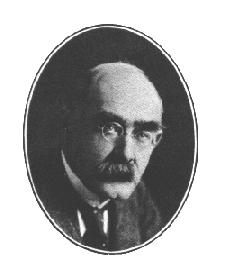
COMPLETE COLLECTION OF POEMSRudyard Kipling Portrait
Rudyard Kipling
Escrita en honor a un golpista imperial:
==============
"Si...", al español por Jacinto Miquelarena 
(recomendado, ya que la traducción líneas abajo no es buena)
«Si...» (originalmente "If—") es un poema escrito en 1896 por el autor inglés Rudyard Kipling, que en aquel momento contaba con 31 años. Fue publicado por primera vez en el «Brother Square Toes», capítulo de Rewards and Fairies, colección de poemas y relatos de Kipling de 1910. Como también ocurriera con Invictus, obra de William Ernest Henley, se trata de una memorable evocación del estoicismo de la era victoriana. Su reconocimiento internacional queda patente por el gran número de versiones y parodias que ha inspirado, así como por la amplia popularidad que todavía hoy tiene especialmente entre los británicos (tal es así que fue votado el poema favorito de los británicos en una encuesta organizada por la BBC en 1995).  
Según el propio Kipling en su autobiografía Something of Myself, publicado póstumamente en 1937, el poema fue inspirado por el Dr. Leander Starr Jameson, quien en 1895 lideró una incursión de las fuerzas británicas contra los Boers en Sudáfrica, que por ello fue llamada la «Incursión de Jameson».1 Este evento incrementó las tensiones que finalmente desembocaron en la Segunda Guerra Anglo-Bóer. La prensa británica, sin embargo, retrató a Jameson como un héroe en medio del desastre.
Nota Maligna:
Similitudes con lo que hizo el castrismo y su idolatria por un modelo innecesario en la cuba de los castro, el revolucionario asesino guevara de la sarna...
son locuras mías...
perdonadme!

la vida ensalzada de los hombres con tacha
la vida como suele ser!

If—
If you can keep your head when all around you
Are losing theirs and blaming it on you;
If you can trust yourself when all men doubt you,

But make allowance for their doubting too;
If you can wait and not be tired by waiting,
Or, being lied about, don't deal in lies,
Or, being hated, don't give way to hating,
And yet don't look too good, nor talk too wise;

If you can dream—and not make dreams your master;
If you can think—and not make thoughts your aim;
If you can meet with triumph and disaster
And treat those two imposters just the same;
If you can bear to hear the truth you've spoken
Twisted by knaves to make a trap for fools,
Or watch the things you gave your life to broken,
And stoop and build 'em up with wornout tools;

If you can make one heap of all your winnings
And risk it on one turn of pitch-and-toss,
And lose, and start again at your beginnings
And never breathe a word about your loss;
If you can force your heart and nerve and sinew
To serve your turn long after they are gone,
And so hold on when there is nothing in you
Except the Will which says to them: "Hold on";

If you can talk with crowds and keep your virtue,
Or walk with kings—nor lose the common touch;
If neither foes nor loving friends can hurt you;
If all men count with you, but none too much;
If you can fill the unforgiving minute
With sixty seconds' worth of distance run

Yours is the Earth and everything that's in it,
And—which is more—you'll be a Man my son!
-----------------------------------------------
Si...
Si puedes mantener en su lugar tu cabeza cuando todos a tu alrededor,
han perdido la suya y te culpan de ello.
Si crees en ti mismo cuando todo el mundo duda de ti,
pero también dejas lugar a sus dudas.

Si puedes esperar y no cansarte de la espera;
o si, siendo engañado, no respondes con engaños,
o si, siendo odiado, no te domina el odio
Y aún así no pareces demasiado bueno o demasiado sabio.

Si puedes soñar y no hacer de los sueños tu amo;
Si puedes pensar y no hacer de tus pensamientos tu único objetivo;
Si puedes conocer al triunfo y la derrota,
y tratar de la misma manera a esos dos impostores.
Si puedes soportar oír toda la verdad que has dicho,
tergiversada por malhechores para engañar a los necios.
O ver cómo se rompe todo lo que has creado en tu vida,
y agacharte para reconstruírlo con herramientas maltrechas.

Si puedes amontonar todo lo que has ganado
y arriesgarlo todo a un sólo lanzamiento ;
y perderlo, y empezar de nuevo desde el principio
y no decir ni una palabra sobre tu pérdida.
Si puedes forzar tu corazón y tus nervios y tus tendones,
para seguir adelante mucho después de haberlos perdido,
y resistir cuando no haya nada en ti
salvo la voluntad que te dice: "Resiste!".

Si puedes hablar a las masas y conservar tu virtud.
o caminar junto a reyes, y no distanciarte de los demás.
Si ni amigos ni enemigos pueden herirte.
Si todos cuentan contigo, pero ninguno demasiado.
Si puedes llenar el inexorable minuto,
con sesenta segundos que valieron la pena recorrer...

Todo lo que hay sobre La Tierra será tuyo,
y lo que es más: serás un hombre, hijo mío.

==========
Y tuyo será el reino de los cielos
y lo que es más: serás inmortal, hijo mío
y tu alma será salva... etcetera
[mi versión para los fieles cristianos]
--un mortal paga-no: ceb

Batallas entre Imperio británico y Reino zulú

"Tiro al negro" de los Casacas Rojas imperiales?
Dos visiones pictográficas
Anglo-Zulu War
Défense de Rorke's Drift.jpg
Detail of a painting depicting the Battle of Rorke's Drift
Date 11 January – 4 July 1879
Location South Africa
Result British victory;
End of the independent Zulu nation
Zulukrieg
Angriff der Zulu bei Isandhlwana
Datum 1879
Ort Zululand
Ausgang Sieg der Briten
Folgen Annexion von Zululand

Suerte de golpista y el despacho de Wilhelm II

[fue un telegrama, puesto que no fue mandado en papel y a lomo de caballo]
Herkunft:
im 17. Jahrhundert von französisch dépêche → fr „Eilnachricht“ entlehnt.[1]

Unter einer Depesche (von französisch dépêcher ‚eilen‘, ‚sich beeilen‘) versteht man ein Telegramm, wobei der Begriff Depesche (auch Kabeldepesche oder genauer „telegraphische Depesche“) vom Begriff Telegramm abgelöst wurde
de.wikipedia.org/wiki/Erster_Burenkrieg
de.wikipedia.org/wiki/Leander_Starr_Jameson
[...]
Von dort aus organisierte er 1895 den sog. Jameson Raid zur Unterwerfung der Buren-Republiken, Transvaal und Oranje-Freistaat, unter direkte britische koloniale Herrschaft, der kläglich scheiterte.
Gefangennahme - Petit Parisien 1896
Jameson wurde für die Teilnahme im Juli 1896 in England aufgrund des Foreign Enlistment Acts zu 15 Monaten Gefängnis verurteilt, musste aber nur etwa 5 Monate absitzen.
In Südafrika wurde er alsbald rehabilitiert, 1900 Mitglied des Parlaments der Kapkolonie, und von 1904 bis 1908 Premierminister und 1911 gar als Baronet in den Adelsstand erhoben. Rudyard Kipling schrieb 1895 inspiriert von Jamesons Verhalten während des Raids das Gedicht „If—“ das noch heute als eines der populärsten in Großbritannien gilt.

de.wikipedia.org/wiki/Krüger-Depesche
Die Krüger-Depesche war eine 1896 von Kaiser Wilhelm II. versandte Botschaft mit antibritischer Tendenz an Paulus „Ohm“ Krüger, den Präsidenten Transvaals im heutigen Südafrika.
„Ich spreche Ihnen Meinen aufrichtigen Glückwunsch aus, dass es Ihnen, ohne an die Hilfe befreundeter Mächte zu appellieren, mit Ihrem Volke gelungen ist, in eigener Tatkraft gegenüber den bewaffneten Scharen, welche als Friedensstörer in Ihr Land eingebrochen sind, den Frieden wiederherzustellen und die Unabhängigkeit des Landes gegen Angriffe von außen zu wahren.“
– Wilhelm I.R.
http://de.wikipedia.org/wiki/Zweiter_Burenkrieg

The Man From Snowy River


"The Man from Snowy River" is a poem by Australian bush poet Banjo Paterson. It was first published in The Bulletin, an Australian news magazine, on 26th April 1890.
The poem tells the story of a horseback pursuit to recapture the colt of a prizewinning racehorse that escaped from its paddock and is living wild with the brumbies (wild horses) of the mountain ranges. Eventually the brumbies descend a seemingly impassably steep slope, at which point the assembled riders give up the pursuit, except the young hero, who spurs his pony down the "terrible descent" to catch the mob.
Two characters mentioned in the early part of the poem are featured in previous Paterson poems; "Clancy of the Overflow" and Harrison from "Old Pardon, Son of Reprieve".

The historical context of the poem
The poem was written at a time in the 1880s and 1890s when Australia was developing a distinct identity as a nation. Though Australia was still a set of independent colonies under the final authority of Britain, and had not yet trod the path of nationhood, there was a distinct feeling that Australians needed to be united and become as one. Poems like "The Man from Snowy River" suggested to the many Australians at the time who read The Bulletin magazine of Sydney, that they shared a unique land and that the characters and heroes who inhabited this land had so much in common. Australians from all walks of life, be they from the country or the city ( see Clancy of the Overflow), looked to the bush for their mythology and heroic characters. They saw in the Man from Snowy River a hero whose bravery, adaptability and risk-taking could epitomise a new nation in the south. This new nation emerged as the Commonwealth of Australia in 1901.
Source
Mountain River and Pack Horses, original painting

Mountain River & Pack Horses - Original painting by Australian artist
Robert Lovett


There was movement at the station, for the word had passed around
That the colt from old Regret had got away,
And had joined the wild bush horses - he was worth a thousand pound,
So all the cracks had gathered to the fray.
All the tried and noted riders from the stations near and far
Had mustered at the homestead overnight,
For the bushmen love hard riding where the wild bush horses are,
And the stock-horse snuffs the battle with delight.

There was Harrison, who made his pile when Pardon won the cup,
The old man with his hair as white as snow;
But few could ride beside him when his blood was fairly up -
He would go wherever horse and man could go.
And Clancy of the Overflow came down to lend a hand,
No better horseman ever held the reins;
For never horse could throw him while the saddle-girths would stand -
He learnt to ride while droving on the plains.

And one was there, a stripling on a small and weedy beast;
He was something like a racehorse undersized,
With a touch of Timor pony - three parts thoroughbred at least -
And such as are by mountain horsemen prized.
He was hard and tough and wiry - just the sort that won't say die -
There was courage in his quick impatient tread;
And he bore the badge of gameness in his quick and fiery eye,
And the proud and lofty carriage of his head.

But still so slight and weedy, one would doubt his power to stay,
And the old man said, "That horse will never do
For a long and tiring gallop - lad, you'd better stop away,
These hills are far too rough for such as you."
So he waited, sad and wistful - only Clancy stood his friend -
"I think we ought to let him come," he said;
"I warrant he'll be with us when he's wanted at the end,
For both his horse and he are mountain bred.

"He hails from Snowy River, up by Kosciusko's side,
Where the hills are twice as steep and twice as rough;
Where a horse's hooves strike firelight from the flintstones every stride,
The man that holds his own is good enough.
And the Snowy river riders on the mountains make their home,
Where the river runs those giant hills between;
I have seen full many horsemen since I first commenced to roam,
But nowhere yet such horsemen have I seen."

So he went: they found the horses by the big mimosa clump,
They raced away towards the mountain's brow,
And the old man gave his orders, "Boys, go at them from the jump,
No use to try for fancy riding now.
And, Clancy, you must wheel them, try and wheel them to the right.
Ride boldly lad, and never fear the spills,
For never yet was rider that could keep the mob in sight,
If once they gain the shelter of those hills."

So Clancy rode to wheel them - he was racing on the wing
Where the best and boldest riders take their place,
And he raced his stock-horse past them and he made the ranges ring
With the stockwhip, as he met them face to face.
Then they halted for a moment, while he swung the dreaded lash,
But they saw their well-loved mountain full in view,
And they charged beneath the stockwhip with a sharp and sudden dash,
And off into the mountain scrub they flew.

Then fast the horsemen followed, where the gorges deep and black,
Resounded to the thunder of their tread,
And the stockwhips woke the echoes, and they fiercely answered back
From cliffs and crags that beetled overhead.
And upward, ever upward, the wild horses held their way,
Where mountain ash and kurrajong grew wide;
And the old man muttered fiercely, "We may bid the mob good day,
NO man can hold them down the other side."

When they reached the mountain's summit, even Clancy took a pull -
It well might make the boldest hold their breath;
The wild hop scrub grew thickly, and the hidden ground was full
Of wombat holes, and any slip was death.
But the man from Snowy River let the pony have his head,
And he swung his stockwhip round and gave a cheer,
And he raced him down the mountain like a torrent down its bed,
While the others stood and watched in very fear.

He sent the flint-stones flying, but the pony kept his feet,
He cleared the fallen timber in his stride,
And the man from Snowy River never shifted in his seat -
It was grand to see that mountain horseman ride.
Through the stringybarks and saplings, on the rough and broken ground,
Down the hillside at a racing pace he went;
And he never drew the bridle till he landed safe and sound
At the bottom of that terrible descent.

He was right among the horses as they climbed the farther hill,
And the watchers on the mountain, standing mute,
Saw him ply the stockwhip fiercely; he was right among them still,
As he raced across the clearing in pursuit.
Then they lost him for a moment, where two mountain gullies met
In the ranges - but a final glimpse reveals
On a dim and distant hillside the wild horses racing yet,
With the man from Snowy River at their heels.

And he ran them single-handed till their sides were white with foam;
He followed like a bloodhound on their track,
Till they halted, cowed and beaten; then he turned their heads for home,
And alone and unassisted brought them back.
But his hardy mountain pony he could scarcely raise a trot,
He was blood from hip to shoulder from the spur;
But his pluck was still undaunted, and his courage fiery hot,
For never yet was mountain horse a cur.

And down by Kosciusko, where the pine-clad ridges raise
Their torn and rugged battlements on high,
Where the air is clear as crystal, and the white stars fairly blaze
At midnight in the cold and frosty sky,
And where around the Overflow the reed-beds sweep and sway
To the breezes, and the rolling plains are wide,
The Man from Snowy River is a household word today,
And the stockmen tell the story of his ride.

- A.B. "Banjo" Paterson